

INTEGRATING GENDER AND DISABILITY INCLUSION INTO ACCOUNTABILITY PROGRAMMING
Theme: Accountability & Inclusion
- Introduction
The Capacity session on Integrating Gender and Disability Inclusion into Accountability Programming, held on 8 September 2026, provided an opportunity to reflect on the importance of gender equality, disability inclusion, and social accountability in the design and implementation of development programmes.
The session focused on moving beyond conventional approaches to gender and disability mainstreaming by examining how programmes can identify and address structural inequalities, promote meaningful participation, strengthen access to information, and ensure that public accountability processes respond to the diverse needs and experiences of community members.
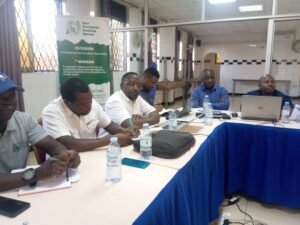 A key reflection emerging from the training was: “We have been training, so what?” This question emphasises the importance of translating knowledge and capacity-building into practical institutional changes, measurable programme outcomes, and improved experiences for the communities LOSCO serves.
The session was particularly relevant to LOSCO’s accountability programming, including citizen engagement, public service monitoring, audit follow-up, community dialogues, engagement with duty bearers, and evidence-based advocacy in Kigezi Sub-region.
- Overall Purpose of the Session
The session aimed to strengthen understanding and practical application of gender and disability inclusion within transparency and accountability programming.
Specific areas of focus included:
- Enhancing understanding of gender, disability, and the social dynamics that influence access to rights and public resources.
- Exploring the relationship between gender equality, disability inclusion, and the fight against corruption.
- Strengthening the integration of gender and disability considerations throughout the programme design and implementation cycle.
- Identifying barriers that prevent women, girls, persons with disabilities, and other marginalised groups from participating meaningfully in accountability processes.
- Promoting inclusive monitoring, reporting, learning, and adaptive programming.
- Identifying practical actions to strengthen LOSCO’s institutional and programme-level gender and disability mainstreaming.
- Key Learning: From Session to Practical Change
3.1 The Importance of Moving from Knowledge to Action
The session emphasised that training should not be viewed as an end in itself. Its value is demonstrated through changes in institutional practice, programme design, staff behaviour, community participation, and accountability outcomes.
The reflection, “We have been training, so what?”, calls for LOSCO to examine how learning is translated into tangible improvements, including:
- Whether gender and disability considerations are incorporated into programme plans and budgets.
- Whether staff apply inclusive approaches during community engagement and monitoring.
- Whether women and persons with disabilities participate meaningfully in accountability processes.
- Whether programme reports capture differentiated experiences and outcomes.
- Whether lessons from implementation inform adaptive programming and institutional improvements.
Key implication for LOSCO: Training outcomes should be followed by clear action points, assigned responsibilities, measurable indicators, and periodic review to determine whether learning has contributed to meaningful change.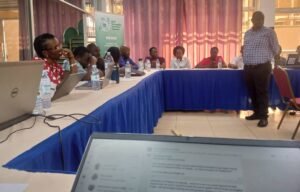
- Gender and the Fight Against Corruption
Gender and disability inclusion are closely connected to effective anti-corruption and accountability programming. Corruption and poor public resource management can affect different groups in unequal ways, depending on their social position, economic circumstances, access to decision-making, and ability to claim public services.
Women, girls, and persons with disabilities may experience additional barriers in accessing health services, education, water, roads, livelihoods, social protection, and other public services. However, the nature and extent of these barriers should be established through evidence, community consultations, and context-specific analysis rather than assumptions.
An inclusive accountability approach should therefore examine:
- Who has access to public information and resources?
- Who participates in decisions concerning public expenditure and service delivery?
- Who experiences exclusion, discrimination, or barriers to services?
- Who can report concerns safely and receive a response?
- Whose experiences are reflected in audit findings, monitoring reports, and corrective action?
Key Reflection
Accountability is meaningful when all citizens can access information, participate in decision-making, raise concerns, and influence corrective action, regardless of gender, disability, or social status.
For LOSCO, this requires connecting public finance accountability with the lived experiences of communities, especially those whose voices may be underrepresented in conventional accountability structures.
- Gender Integration in the Project Design Cycle
The training introduced a project design and implementation framework referred to as the FIAIM cycle, comprising the following stages:
- Identification; Identify gender and disability-related inequalities, barriers, stakeholders, and community needs before designing an intervention.
- Formulation; Integrate identified needs into programme objectives, activities, budgets, indicators, and implementation strategies.
- Application; Apply gender-responsive and disability-inclusive approaches, tools, and participation mechanisms in programme delivery.
- Implementation; Deliver activities in ways that address accessibility, participation, safety, reasonable accommodation, and equitable opportunities.
- Monitoring; Track inclusion, participation, outcomes, and unintended social impacts, using evidence to inform learning and adaptation.
Practical consideration: The FIAIM framework should be applied as a continuous process rather than a series of isolated activities. Gender and disability analysis must inform decisions at each stage and be revisited as the programme context changes.
- Analysis of Gender and Disability Inclusion in Accountability Programming
The session highlighted several areas requiring deliberate attention in LOSCO’s programming. The issues below represent areas for assessment and programme improvement. They should not be treated as verified findings from a completed field assessment unless supported by documented evidence.
6.1 Access to Information
Public budgets, audit reports, project information, and accountability materials are often presented in technical formats that may be difficult for some community members to understand or access.
Potential barriers include:
- Limited access to information in accessible and simplified formats.
- Low levels of awareness of public financial information and audit findings.
- Communication formats that do not adequately accommodate persons with disabilities.
- Social and economic barriers affecting participation in information-sharing activities.
Recommended mitigation measures:
- Translate technical audit and budget information into plain-language community materials.
- Use accessible communication formats, including appropriate large-print, audio, and other formats based on identified needs.
- Engage representative organisations of persons with disabilities when developing communication approaches.
- Provide opportunities for community members to ask questions and seek clarification.
6.2 Meaningful Participation and Influence
The presence of women and persons with disabilities in meetings does not automatically guarantee meaningful participation.
Programme teams should examine whether participants have opportunities to speak, influence priorities, contribute evidence, and participate in decisions.
Recommended mitigation measures:
- Design inclusive consultation processes that allow diverse participants to contribute.
- Establish facilitation practices that prevent exclusion and encourage equitable participation.
- Provide reasonable accommodation where required.
- Monitor participation quality, not only the number of attendees.
6.3 Equitable Public Resource Allocation
Accountability programming should assess whether public resources respond to the needs of different population groups. Relevant sectors in Kigezi may include:
- Health and maternal health services.
- Education and school retention.
- Water and sanitation.
- Roads and public infrastructure.
- Social protection.
- Agricultural and livelihood programmes.
Recommended mitigation measures:
- Examine budget priorities and expenditure against the needs identified by different groups.
- Incorporate gender and disability considerations into citizen monitoring tools.
- Document evidence of service gaps and barriers.
- Engage duty bearers on equitable resource allocation and corrective measures.
6.4 Accessibility of Accountability Mechanisms
Physical venues, transport, communication channels, and digital platforms can affect the ability of some community members to participate.
Recommended mitigation measures:
- Conduct accessibility assessments before organising public meetings.
- Select venues that accommodate persons with different mobility and accessibility needs.
- Provide reasonable accommodation based on individual requirements.
- Consider communication accessibility and the feasibility of alternative participation channels.
- Include accessibility costs in programme budgets.
6.5 Gender-Responsive and Disability-Inclusive Monitoring
Monitoring systems should help identify who benefits from public services, who is excluded, and how programme interventions affect different population groups.
Where ethically appropriate, feasible, and consistent with data protection requirements, data should be disaggregated by relevant characteristics, such as:
- Sex and gender-related considerations.
- Disability, using appropriate and respectful approaches.
- Location and other contextually relevant factors.
Recommended mitigation measures:
Develop inclusive monitoring tools and reporting templates.
Collect data that enables analysis of differential experiences and outcomes.
Obtain informed consent where applicable and safeguard personal information.
Combine quantitative data with qualitative accounts and community perspectives.
6.6 Safety, Protection, and Safeguarding
Women, persons with disabilities, and accountability actors may face risks when raising concerns about corruption, discrimination, or service delivery failures. The nature of such risks should be assessed in the specific programme context.
Recommended mitigation measures:
- Establish safe and confidential reporting channels.
- Conduct risk assessments for community monitors and participants.
- Apply safeguarding and protection procedures.
- Ensure that complaints and referrals are handled responsibly.
- Avoid exposing individuals to retaliation through inappropriate disclosure of personal information.
6.7 Representation in Decision-Making
Accountability structures should provide meaningful opportunities for women, persons with disabilities, and representative community organisations to contribute to decisions.
Recommended mitigation measures:
- Engage women’s organisations and organisations of persons with disabilities.
- Assess representation within community monitoring and dialogue structures.
- Ensure that participation is not limited to symbolic attendance.
- Build partnerships with relevant district-level structures and representative organisations.
- Social Impact Analysis: What Should Be Examined?
A key question raised was:
What are the findings of the analysis, what social impacts have been identified, and what mitigation measures are required?
For effective accountability programming, LOSCO should distinguish between identified evidence, emerging concerns, and issues requiring further investigation.
The following analytical framework can guide programme assessments:
- Area of analysis
- Potential social impact to assess
- Mitigation approach
- Access to public information
- Exclusion from information and reduced ability to claim services
- Accessible information and community sensitisation
- Participation in decision-making
- Limited voice and influence among excluded groups
- Inclusive facilitation and meaningful representation
- Public resource allocation
- Unequal access to public services or infrastructure
- Equity-focused budget and service monitoring
- Accessibility
- Barriers to attending meetings or using reporting mechanisms
- Reasonable accommodation and accessible venues
- Safety and protection
- Risk of intimidation, retaliation, or exclusion
- Safeguarding and confidential reporting
- Monitoring and evidence
- Incomplete understanding of different community experiences
- Inclusive data collection and qualitative feedback
- Institutional practices
- Gender and disability considerations not integrated into decisions
- Mainstreaming, accountability, and staff capacity development
Important: The identified issues to investigate and possible mitigation approaches. It does not establish that these impacts have been verified in LOSCO’s target communities. Specific findings should be supported by assessment data, community consultations, monitoring records, or other documented evidence.
- Gender and Disability Programming Continuum
The training introduced a continuum for assessing the extent to which gender and disability considerations are integrated into organisational and programme practice.
- Gender Neutral; Does not deliberately consider differences in needs, experiences, or barriers.
- Gender Aware; Recognises gender-related inequalities and differences in context.
- Gender Sensitive; Responds to identified gender and inclusion needs in programme activities.
- Gender Responsive; Integrates identified needs into programme design, implementation, budgeting, and monitoring.
- Gender Transformative; Seeks to address harmful norms, unequal power relations, and structural barriers.
The continuum provides a framework for organisational reflection and progressive improvement. LOSCO should assess its current position through evidence, including policies, programme documentation, staff practices, community feedback, and monitoring results, rather than assigning a level solely on the basis of intention.
The objective is to strengthen both institutional mainstreaming and programme-level integration, with a focus on meaningful inclusion and measurable change.
- Gender Mainstreaming, Integration, and Inclusion
The training emphasised the need to distinguish and connect three complementary approaches.
9.1 Gender Mainstreaming; Gender mainstreaming involves incorporating gender equality considerations into organisational policies, systems, planning, budgeting, implementation, monitoring, and evaluation.
At the institutional level, LOSCO should consider:
- Gender and disability inclusion within organisational policies.
- Staff capacity and responsibilities.
- Recruitment, leadership, and decision-making practices.
- Budgeting and resource allocation.
- Organisational monitoring and reporting.
9.2 Gender and Disability Integration; Integration involves incorporating specific gender and disability considerations into programme design and delivery.
For LOSCO, this may include:
- Gender and disability analysis during project design.
- Inclusive stakeholder mapping.
- Accessible community engagement.
- Inclusive indicators and data collection.
- Gender- and disability-responsive budgets.
- Feedback and referral mechanisms.
9.3 Inclusion; Inclusion requires addressing barriers that prevent individuals and groups from participating meaningfully and benefiting equitably from programmes.
An inclusive approach should consider the diversity of women’s and men’s experiences, the circumstances of persons with disabilities, and the intersection of factors such as age, poverty, location, and social exclusion.
Key principle: Inclusion should be intentional, evidence-informed, and reflected in both institutional systems and programme implementation.
- The Eight Inclusion Needs
The training identified eight key inclusion needs to guide programme planning and implementation.
- Access — Ability to access information, services, activities, and opportunities.
- Space — Physical, social, and institutional spaces for participation.
- Opportunity — Equitable opportunities to participate, lead, and benefit.
- Representation — Inclusion of diverse voices in decisions and accountability structures.
- Allowance / Accommodation — Reasonable accommodation and resources to enable participation.
- Language — Clear, respectful, and accessible communication.
- Respect — Dignity, non-discrimination, and recognition of rights.
- Support — Appropriate assistance, safeguarding, referrals, and follow-up.
These needs should be integrated into stakeholder analysis, activity planning, budgets, implementation arrangements, and monitoring systems.
- Adaptive Programming and Intersectional Analysis
The session highlighted the importance of deeper gender analysis and consideration of diversity within communities. A uniform approach to women, men, girls, boys, or persons with disabilities may overlook differences in lived experiences and access to power and resources.
11.1 Intersectional Analysis
An intersectional approach recognises that individuals may experience multiple and overlapping barriers. For example, a woman with a disability living in a remote community may face a different combination of barriers from those experienced by other community members.
Programme analysis should therefore examine how factors such as:
- Gender and sex.
- Poverty and livelihood status.
- Location and remoteness.
- Social norms and power relations.
- interact in the particular context.
The purpose is not to make assumptions about individuals but to understand barriers through evidence and meaningful consultation.
11.2 Adaptive Programming
Adaptive programming allows organisations to revise approaches based on emerging evidence, changes in context, implementation experience, and community feedback.
For LOSCO, this could involve:
- Periodic review of inclusion outcomes.
- Adjustment of activities when barriers are identified.
- Revision of stakeholder engagement approaches.
- Incorporation of feedback from women, persons with disabilities, and other affected groups.
- Documenting lessons and applying them to future interventions.
Key consideration: Mainstreaming and integration should be supported by ongoing learning, rather than treated as fixed compliance requirements.
- Relevance to LOSCO’s Transparency and Accountability Work
Integrating gender and disability inclusion strengthens LOSCO’s accountability programming by ensuring that public accountability processes reflect the needs and experiences of the full community.
The central question is:
“Accountable to whom, and whose experience is being reflected in the evidence?”
For LOSCO, this has direct relevance to the accountability chain:
- Audit and Public Finance Evidence
- Identify resource allocation and service delivery issues.
- Inclusive Citizen Understanding
- Make information accessible and relevant to diverse communities.
- Community Monitoring
- Capture differentiated experiences of public services.
- Inclusive Dialogue with Duty Bearers
- Ensure diverse voices inform engagement and priorities.
- Evidence-Based Media and Advocacy
- Communicate verified findings without exposing vulnerable individuals to harm.
- Follow-Up and Verification
- Track corrective action and assess whether responses address identified needs.
- Expected Contribution to LOSCO’s Work
- The integration of gender and disability inclusion is expected to support:
- More accessible public information and accountability processes.
- Improved participation and representation of excluded groups.
- Stronger evidence on differentiated service delivery experiences.
- More responsive engagement with duty bearers.
- Improved quality of monitoring reports and advocacy messages.
- Institutional learning and strengthened programme accountability.
These are intended programme contributions. Their actual effectiveness should be assessed through relevant indicators and documented evidence.
- Key Takeaways and Agreed Areas for Action
The following action areas emerged from the training reflections and provide a basis for strengthening LOSCO’s institutional and programme practices.
13.1 Develop a Gender- and Disability-Responsive Reporting Template
LOSCO should develop a reporting template that captures gender and disability considerations across its activities.
The template should include:
- Participation and representation.
- Identified inclusion barriers.
- Differentiated experiences and outcomes.
- Reasonable accommodation provided.
- Safeguarding and protection concerns.
- Actions taken and follow-up requirements.
- Lessons learned and recommendations.
Important: Reports should avoid reducing complex gender or disability experiences to assumptions based solely on identity. Findings should be grounded in relevant evidence and reported in a way that protects confidentiality.
13.2 Strengthen Stakeholder Analysis; Gender and disability considerations should be incorporated into stakeholder mapping and analysis.
The process should identify:
- Key community groups and representative organisations.
- Power dynamics and decision-making structures.
- Potential barriers to participation.
- Relevant duty bearers and service providers.
- Opportunities for collaboration and referral.
- Risks and safeguarding considerations.
Stakeholder analysis should inform activity design, implementation, and resource allocation.
13.3 Intentionally Monitor Gender and Disability Inclusion; LOSCO should establish deliberate mechanisms for monitoring gender and disability inclusion across programmes.
This includes:
- Inclusion-specific indicators.
- Activity-level documentation.
- Disaggregated data where appropriate.
- Community feedback mechanisms.
- Periodic reflection and review.
- Corrective action tracking.
Monitoring should assess not only participation levels but also whether programme interventions contribute to meaningful inclusion and improved outcomes.
13.4 Document Contributions to Development and Transformation; LOSCO should strengthen documentation of how its interventions contribute to individual, institutional, and community-level change.
Relevant areas include:
- Increased awareness of rights and responsibilities.
- Improved participation in accountability processes.
- Changes in institutional practices.
- Improved access to public services.
- Strengthened voice and influence of excluded groups.
- Changes in policies, procedures, or community practices.
Claims of transformation should be supported by appropriate evidence, such as outcome monitoring, case studies, community feedback, and documented institutional changes.
13.5 Continue Engagement with District Disability Structures; LOSCO should explore continued engagement with relevant district-level disability structures, including the district council responsible for disability affairs and organisations representing persons with disabilities.
Potential areas of collaboration include:
- Programme design and stakeholder consultation.
- Accessibility assessments.
- Community mobilisation.
- Monitoring of public services.
- Capacity strengthening and referrals.
- Joint reflection on inclusion barriers.
Engagement should be based on clear roles, mutual accountability, and meaningful participation.
- Recommended Implementation Matrix
The following matrix translates the key learning points into practical institutional actions. The responsible persons and timelines should be agreed upon by LOSCO management.
Action | Proposed indicator | Responsibility |
Develop a gender- and disability-responsive reporting template | Approved template in use across relevant programmes | Programme and MEL team |
Conduct gender and disability analysis during project design | Documented analysis in project proposals and plans | Programme team |
Strengthen inclusive stakeholder mapping | Updated stakeholder analysis with representative organisations | Programme team |
Review accessibility of accountability activities | Accessibility needs assessed and actions documented | Programme team |
Integrate inclusion indicators into monitoring | Relevant indicators included in monitoring tools | MEL team |
Engage district disability structures | Documented engagement and agreed areas of collaboration | Programme leadership |
Conduct periodic reflection on inclusion | Reflection meetings and action tracking records | Management and programme teams |
Document outcomes and learning | Case studies, monitoring reports, and evidence of change | MEL and communications team |
Conclusion
The training on Integrating Gender and Disability Inclusion into Accountability Programming reinforced the importance of embedding inclusion in the systems, processes, and practices through which development and accountability programmes are designed and implemented.
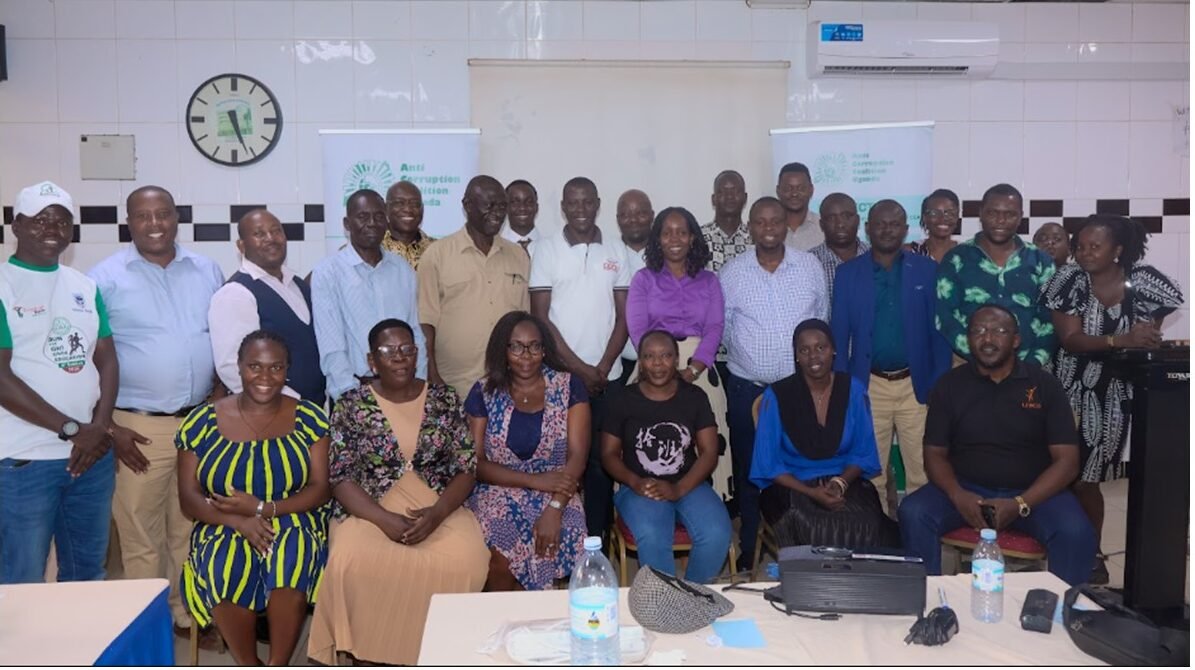
For LOSCO, the session provides an opportunity to strengthen the relationship between human rights, gender equality, disability inclusion, and citizen accountability. It emphasises the need to ensure that women, girls, persons with disabilities, and other potentially excluded groups are not treated merely as programme beneficiaries, but are recognised as rights holders and meaningful participants in the processes that affect their lives.
The central learning is that accountability must be inclusive in its design, evidence, participation, and follow-up. This requires moving from training and awareness to measurable institutional and programme-level action.
Going forward, LOSCO should prioritise the development of inclusive reporting tools, strengthened stakeholder analysis, accessible community monitoring, engagement with disability structures, and adaptive learning mechanisms. These measures can contribute to more responsive and equitable accountability programming across Kigezi and other areas of operation.
The ultimate objective is to advance a practical approach to accountability that works with all citizens, reflects their diverse experiences, and supports meaningful institutional and community change.